building permits for steel structure construction in BC are often required for more than just basic approval. In British Columbia, permit requirements depend on the building’s size, intended use, site conditions, and the rules of the local municipality or regional district. Whether you are planning a workshop, warehouse, farm building, or commercial steel structure, understanding the permit process early can help you avoid delays, redesign costs, and compliance issues.
In this guide, the team at Apex Metal Work explains the key permits commonly required for steel buildings in BC, along with the local factors that can affect approval. If you are planning a new project, working with an experienced provider of steel structure construction services in BC can make the permit process much more manageable.
TL;DR:
Do you need a permit? Most permanent steel buildings require a building permit. Confirm requirements with your municipality or regional district before construction.
Check the property first: Zoning, setbacks, height limits, lot coverage and intended use determine what you can build.
Other approvals may apply: Development, electrical, plumbing, gas, drainage or septic approvals depend on the site and building systems.
Prepare complete plans: Applications commonly need site, building, structural and foundation drawings, with site-specific engineering and supporting reports where required.
Costs and timelines vary: Your local authority sets fees and review schedules. Missing documents, zoning conflicts and complex site conditions can delay approval.
Approval continues during construction: Arrange required inspections and obtain final approval or occupancy clearance where applicable before using the building.
When Building Permits for Steel Structure Construction in BC Are Usually Required
In BC, a building permit is generally required when a steel structure is permanent, attached to the ground, or intended for regular use. This includes many steel workshops, warehouses, storage buildings, commercial units, industrial shops, farm buildings, and additions to existing structures. The permit process allows the local authority to review whether the building meets safety, zoning, structural, foundation, access, and code requirements before construction starts.
A permit is especially likely to be required when the project involves:
A permanent foundation: such as concrete slabs, footings, piers, or engineered anchoring systems.
Structural steel framing: including columns, beams, roof systems, bracing, and load-bearing components.
Commercial, industrial, or agricultural use: where the building may need to meet specific occupancy, fire safety, access, or operational requirements.
Utilities or building systems: including electrical service, plumbing, gas, heating, ventilation, or drainage.
Changes to an existing structure: such as an addition, expansion, enclosure, or major structural modification.
Not every steel structure is reviewed in the same way. Some projects may have different requirements depending on the local bylaw, the property type, and how the structure will be used.
Situation
Why Requirements May Vary
Small accessory buildings
Some jurisdictions have size thresholds, but zoning and placement rules may still apply.
Temporary steel structures
Temporary use may follow a different approval process, especially if the structure is used by the public or connected to services.
Agricultural buildings
Farm-related structures may be reviewed differently, but ALR rules, zoning, and local permits can still apply.
Rural or regional district properties
Requirements can differ from incorporated municipalities, especially for servicing, access, septic, and fire response.
Non-occupied storage structures
A simple storage use may be less complex than a heated shop, office, or public-access building.
The Main Permits You May Need for a Steel Structure in BC
Building permits for steel structure construction in BC depend on the project scope, location, and building use. A simple unheated storage building may need fewer approvals, while a commercial shop, warehouse, or industrial steel building may involve several permits and reviews before construction can begin.
Building Permit
A building permit is the main approval for constructing the steel structure itself. It allows the local authority to review the building for code compliance, structural safety, foundation design, setbacks, height, and intended occupancy.
For most permanent steel buildings, this is the first permit owners should expect to deal with.
Development Permit
A development permit may be required if the property is located in a designated development permit area. This can apply to sites with environmental sensitivity, flood risk, hillside conditions, wildfire interface concerns, or specific commercial and industrial design requirements.
This permit is often reviewed before, or alongside, the building permit.
Zoning and Land Use Approval
Before a steel building can be approved, the proposed use must be allowed under the property’s zoning. Local planning staff may review:
permitted use
setbacks
maximum height
lot coverage
parking
loading access
distance from property lines
A project can meet structural requirements but still be delayed if it does not comply with zoning.
Electrical Permit
An electrical permit is usually required if the steel structure will have power, lighting, panels, outlets, equipment connections, or service upgrades. This permit is typically handled by a licensed electrical contractor or through the proper electrical safety authority, depending on the jurisdiction.
Plumbing Permit
A plumbing permit may be needed if the building includes washrooms, sinks, floor drains, water lines, or sanitary drainage. This is common for workshops, commercial buildings, industrial shops, and steel structures with employee or customer facilities.
Gas Permit
If the building uses gas-fired heaters, boilers, unit heaters, or gas lines, a gas permit is usually required. Gas work must meet safety requirements and is normally completed by a qualified gas contractor.
Mechanical or HVAC Permit
A mechanical or HVAC permit may apply when the building includes heating, ventilation, air handling, exhaust systems, or specialized equipment. This is especially important for shops, warehouses, and industrial spaces where ventilation, fumes, or indoor air quality must be addressed.
Demolition Permit
If an old building, shed, or structure must be removed before the new steel structure is built, a demolition permit may be required. Some jurisdictions also ask for information about utility disconnection, waste disposal, hazardous materials, or site safety before demolition begins.
Site Servicing or Driveway Permit
A site servicing or driveway permit may be needed for new access points, culverts, stormwater systems, utility connections, grading, or changes to site drainage. These approvals help confirm that the project will not create access, flooding, runoff, or infrastructure issues.
Septic or Health Approval
If the property is not connected to municipal sewer, septic or health approval may be required before plumbing fixtures can be added. This can affect rural steel buildings, farm shops, workshops, and commercial structures outside serviced areas.
What Determines Which Permits Your Steel Building Will Need?
Permit requirements depend on more than the structure itself. In BC, local authorities usually look at the building’s use, size, location, and site conditions before deciding which approvals are needed.
The Building’s Intended Use
A storage building is usually reviewed differently than a workshop, warehouse, farm building, or commercial space. The more complex the use, the more permits and code checks may apply.
The Size and Height of the Structure
Larger or taller steel buildings often require more detailed review. They can affect setbacks, lot coverage, structural design, fire access, and parking requirements.
Whether the Building Will Be Occupied or Conditioned
If the building will be heated, insulated, or regularly used by people, extra requirements may apply. This can affect energy compliance, ventilation, plumbing, accessibility, and fire safety.
Your Property Location and Local Jurisdiction
Rules vary between municipalities and regional districts. Site conditions such as snow load, coastal exposure, flood risk, and rural servicing can also change permit requirements.
Whether the Property Is in the ALR or Another Regulated Area
Properties in the ALR, floodplain, or other regulated areas may need extra approvals. These restrictions can affect building placement, allowed use, and application documents.
BC-Specific Permit Requirements for Steel Structures
Building permits for steel structure construction in BC are not reviewed the same way in every location. Provincial code rules apply across the province, but local climate, soil, and site conditions often shape how the structure must be designed and approved.
BC Building Code Compliance
At the permit stage, local authorities usually check whether the steel structure aligns with the BC Building Code. This often includes:
structural safety
fire protection
exits and life safety
occupancy type
basic health and safety standards
The more complex the building use, the more detailed this review tends to be.
Snow Load Requirements
Snow load is one of the most important BC-specific design factors for steel buildings. It can change the size of members, roof design, and connection details.
Location Condition
Why It Matters
Heavy snow region
May require stronger roof framing
Mountain or interior area
Often needs higher snow load design
Mild climate area
May still require site-specific verification
Wind and Coastal Exposure
Buildings near the coast or in open exposure areas may need to be designed for higher wind forces. This can affect wall framing, roof connections, anchoring, and overall lateral stability.
Foundation and Soil Conditions
Even if the steel frame is pre-designed, the foundation still has to suit the site. Reviewers may look at:
soil bearing capacity
slope conditions
drainage
groundwater
frost depth
Poor soil or uneven ground can lead to extra engineering or geotechnical review.
Professional Engineering Requirements
Most steel structures require engineering, especially for the framing and foundation. In many cases, sealed drawings from a registered professional are needed to support the permit application and confirm that the building is suitable for the site.
Energy Compliance for Conditioned Buildings
If the building will be heated or insulated, energy rules may also apply. Instead of reviewing only the structure, the permit review may also include the building envelope and mechanical planning.
Typical areas affected include:
insulation values
wall and roof assemblies
air sealing details
heating and ventilation systems
An unheated storage building and a conditioned work space may look similar from the outside, but they can face very different permit requirements.
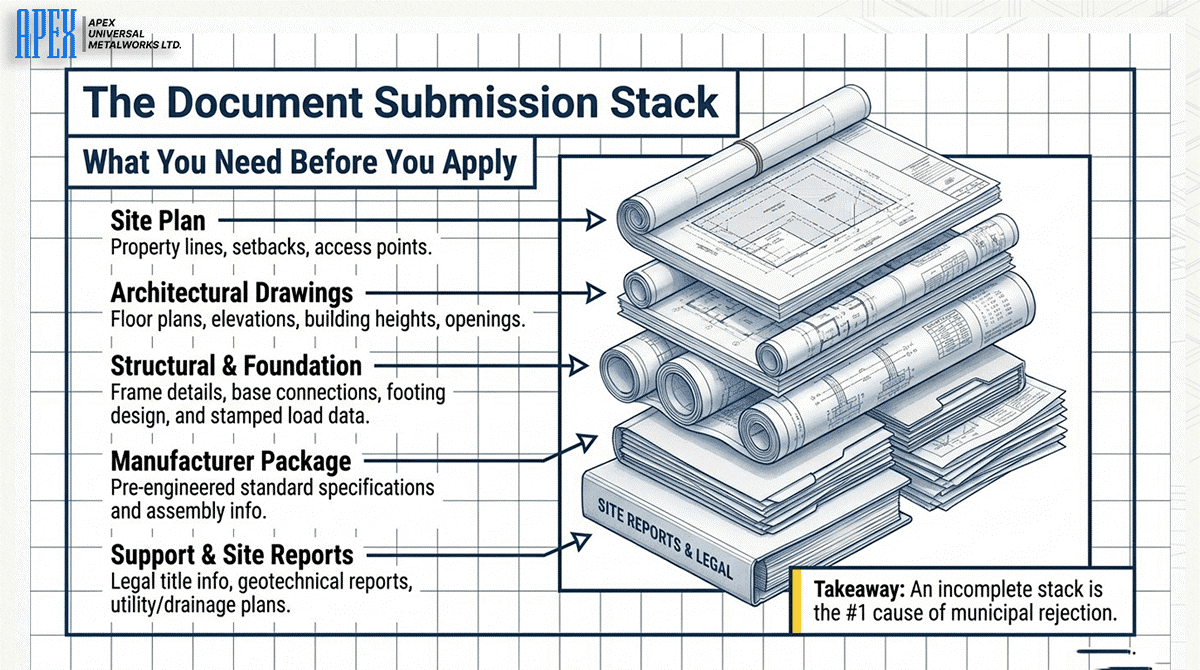
Documents Commonly Required for a Steel Structure Permit
Before a permit is issued, most BC jurisdictions want a clear picture of the building, the site, and any supporting systems. The exact checklist varies, but the documents below are commonly requested.
Site Plan
This shows the proposed location of the steel building on the property. It usually identifies property lines, setbacks, access points, existing structures, and basic site dimensions.
Architectural Drawings
These drawings explain how the building is arranged and how it will be used. In many cases, they include:
floor plan
elevations
building height
openings such as doors and windows
room or area use
Structural and Foundation Drawings
Structural documents focus on how the building will perform. Reviewers typically expect details for the steel frame, base connections, footing design, slab, and anchoring.
Manufacturer’s Building Package
For a pre-engineered steel building, the supplier package is often part of the application.
Common Item
Purpose
Frame details
Shows the structural system
Load data
Confirms design assumptions
Connection information
Helps verify assembly and support
Standard specifications
Supports technical review
Property and Title Information
Some applications also require legal property documents. These may be used to check whether the project is affected by:
easements
covenants
rights-of-way
other title restrictions
Geotechnical or Site Reports
If the site has weak soil, slope issues, drainage concerns, or groundwater challenges, extra reporting may be needed. This helps confirm that the foundation design matches the actual ground conditions.
Mechanical, Plumbing, or Electrical Plans
Not every steel structure needs full trade drawings, but many occupied or serviced buildings do. If the project includes HVAC, plumbing, lighting, or power distribution, those systems may need separate plans for review.
Septic, Drainage, or Utility Documents
On some properties, especially rural ones, supporting site documents are just as important as the building drawings. These can include septic approval, drainage details, water servicing information, or utility connection plans.
Common Reasons Steel Building Permit Applications Get Delayed
Many permit delays happen for the same reason: the application is submitted before the project is fully coordinated. In BC, steel building applications are often slowed down by missing technical details, site conflicts, or approvals that were not addressed early.
Incomplete Drawings or Missing Engineering: Missing plans, details, or sealed engineering can stop the review process.
Zoning Conflicts: If the proposed building or use does not match local zoning rules, the application may be delayed.
Incorrect Setbacks or Lot Coverage: A building placed too close to property lines or exceeding site limits often triggers revisions.
Missing Drainage or Site Servicing Information: Incomplete details about access, drainage, grading, or utilities can hold up approval.
Foundation Design That Does Not Match Site Conditions: Foundation plans may need changes if they do not suit the actual soil or site conditions.
Unclear Building Use or Occupancy: Vague project descriptions can delay review because permit requirements depend on how the building will be used.
Missing Trade Permit Coordination: Overlooking electrical, plumbing, gas, or mechanical permit needs can create avoidable delays.
ALR, Floodplain, or Environmental Restrictions: Projects in regulated areas may need extra approvals before the permit can move forward.
How Long Does It Take to Get a Permit for a Steel Structure in BC?
Timelines for building permits for steel structure construction in BC vary by municipality, building size, site conditions, and the complexity of the project. A small accessory building may move through review relatively quickly, while a commercial steel building with servicing, engineering, and zoning considerations can take much longer.
Factors That Affect Permit Timelines
Several items can influence how quickly a permit is reviewed and approved:
Municipality workload: Busy building departments may have longer review queues.
Completeness of the application: Missing drawings, forms, or reports usually cause delays.
Zoning and planning review: Setbacks, lot coverage, use, parking, and ALR status may need to be checked first.
Engineering requirements: Sealed structural drawings, foundation design, and load calculations can add review time.
Site conditions: Sloped land, poor soil, floodplain areas, or servicing issues may require extra documentation.
Project use: Commercial, industrial, agricultural, and public-use buildings are typically reviewed more closely.
Small Simple Buildings vs Complex Commercial Projects
Project Type
Typical Timeline Considerations
Small storage or accessory steel building
Usually faster if zoning is clear and drawings are complete.
Farm or agricultural steel building
May require zoning review, ALR confirmation, and site-specific approvals.
Workshop or garage with utilities
Often needs electrical, plumbing, drainage, or mechanical coordination.
Commercial or industrial steel building
Usually takes longer due to occupancy, fire safety, accessibility, servicing, and engineering review.
How to Avoid Unnecessary Delays
The best way to reduce delays is to confirm local requirements before submitting the application. Property owners should review zoning rules, prepare complete drawings, include required engineering, and make sure the proposed use is clearly described.
Working with an experienced steel building provider like Apex Metal Work can also help keep the process organized by identifying common permit issues early and preparing the right information for municipal review.
How Much Do Steel Building Permits Cost in BC?
There is no single price for building permits for steel structure construction in BC because each municipality sets its own fee schedule. In most cases, permit costs depend on the size of the building, the declared construction value, the type of use, and whether additional reviews or trade permits are required.
What Permit Fees Usually Depend On
Permit fees are commonly based on a combination of the following:
Building size: Larger steel structures usually have higher permit fees.
Construction value: Many municipalities calculate fees partly from the estimated project value.
Project type: Residential, agricultural, commercial, and industrial projects may be priced differently.
Complexity of review: Projects needing engineering review, fire and life safety review, or planning approval may cost more.
Trade permits: Electrical, plumbing, gas, or mechanical permits are often charged separately.
Site-specific conditions: Floodplain review, development permit areas, servicing review, or geotechnical requirements can add cost.
Additional municipal charges: Some jurisdictions may include plan review fees, damage deposits, or utility-related charges.
For that reason, the best approach is to check the local municipality’s current fee schedule before budgeting the project.
Step-by-Step: How to Prepare for a Steel Building Permit Application in BC
A steel building permit application is much easier to manage when the planning, engineering, and site documents are organized before submission. The exact process depends on the municipality, but most projects in BC follow a similar path.
Step 1: Confirm Zoning and Intended Use
Start by confirming that the steel structure is allowed on the property and that the intended use matches local zoning rules, whether it is for storage, agriculture, commercial use, a workshop, or industrial operations.
Step 2: Review Setbacks, Height Limits, and Site Constraints
Check setbacks, lot coverage, height limits, parking requirements, access, ALR status, floodplain rules, and any development permit areas before finalizing the building location.
Step 3: Get the Right Steel Building Design and Engineering
Choose a steel building design that meets BC Building Code requirements and includes the correct snow, wind, seismic, and foundation engineering for the project location.
Step 4: Prepare Site, Structural, and Utility Documents
Most applications need a complete package that may include:
Site plan
Building drawings
Structural drawings
Foundation design
Manufacturer specifications
Utility and servicing plans
Drainage or grading details
Geotechnical report, if required
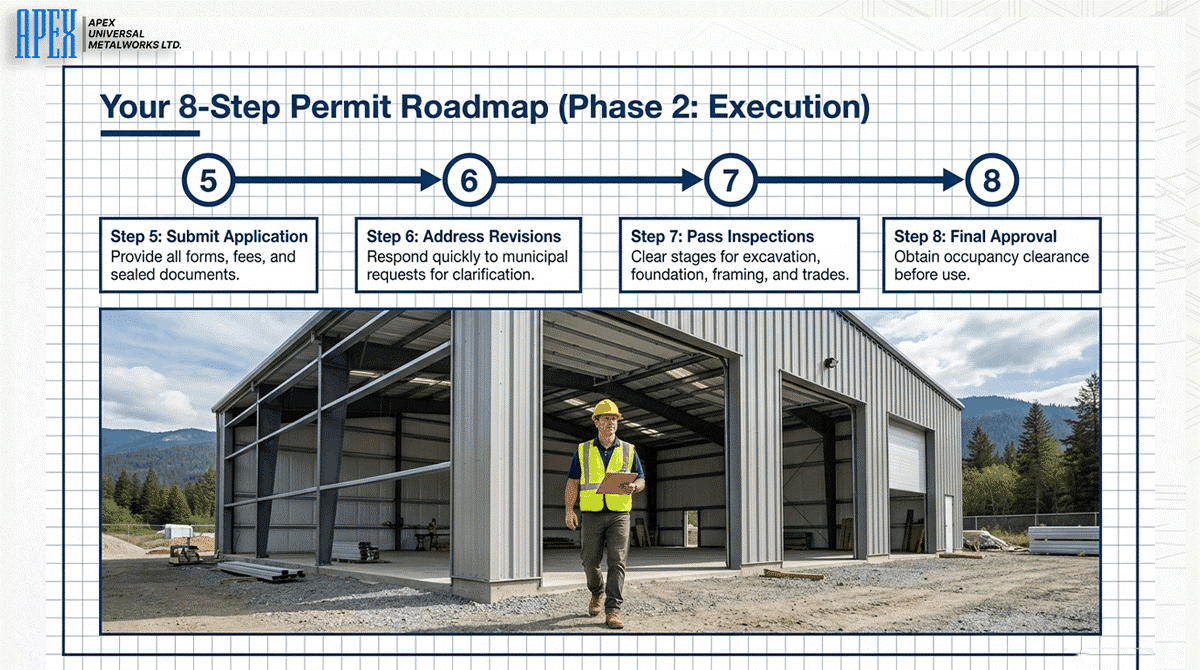
Step 5: Submit a Complete Permit Application
Submit all required forms, drawings, engineering documents, fee payments, and supporting reports to the local building department to begin the review process.
Step 6: Respond to Plan Review Comments
If the municipality requests revisions or clarification, respond quickly with updated drawings, corrected details, or additional engineering information.
Step 7: Schedule Required Inspections
Once the permit is issued, inspections may be required at key stages such as excavation, foundation, framing, structural connections, insulation, utilities, and final completion.
Step 8: Obtain Final Approval or Occupancy Clearance
Before using the steel structure, confirm that all required inspections are passed and that the municipality has issued final approval or occupancy clearance where applicable.
Working with an experienced team like Apex Metal Work can help simplify this process by making sure the steel building design, documentation, and project details are properly coordinated from the start.
Conclusion
Getting building permits for steel structure construction in BC is much easier when you confirm zoning early, prepare complete drawings, account for local snow, wind, seismic, and site conditions, and submit the right engineering documents from the start. Since requirements can change by municipality and project type, working with an experienced steel building team can save time and prevent costly revisions. Apex Metal Work helps clients plan, design, and build durable steel structures across BC with the right technical support and attention to permit-ready details.
Get a Free Quote
Tell us about your next project and our team of experts will contact you to see how we can help you stay within budget and make it a reality. No terms and conditions apply.