



Steel Structure Engineering for Vancouver’s Climate involves more than choosing the right size beams and columns. Vancouver’s wet coastal climate, year-round moisture, wind-driven rain, and seismic demands all play a major role in how structural steel should be designed, protected, and maintained. Whether you are building a commercial facility, industrial space, or custom architectural project, understanding these conditions early can help prevent costly issues later. At Apex Metalwork, we have seen how climate-aware planning, practical detailing, and the right fabrication approach can make a major difference in the long-term performance of a steel structure in the Lower Mainland.
Why Steel Structure Engineering for Vancouver’s Climate Matters
Vancouver’s climate affects more than the exterior appearance of a steel structure. Rain, humidity, coastal air, seismic activity, and seasonal storms all influence how structural steel should be designed, fabricated, coated, installed, and maintained. In this region, a successful steel project is not only about load capacity. It also depends on durability, drainage, corrosion control, and detailing that matches local site conditions.
If you are also comparing budgets, our guide on how much a steel structure costs explains the main pricing factors for steel projects in BC.
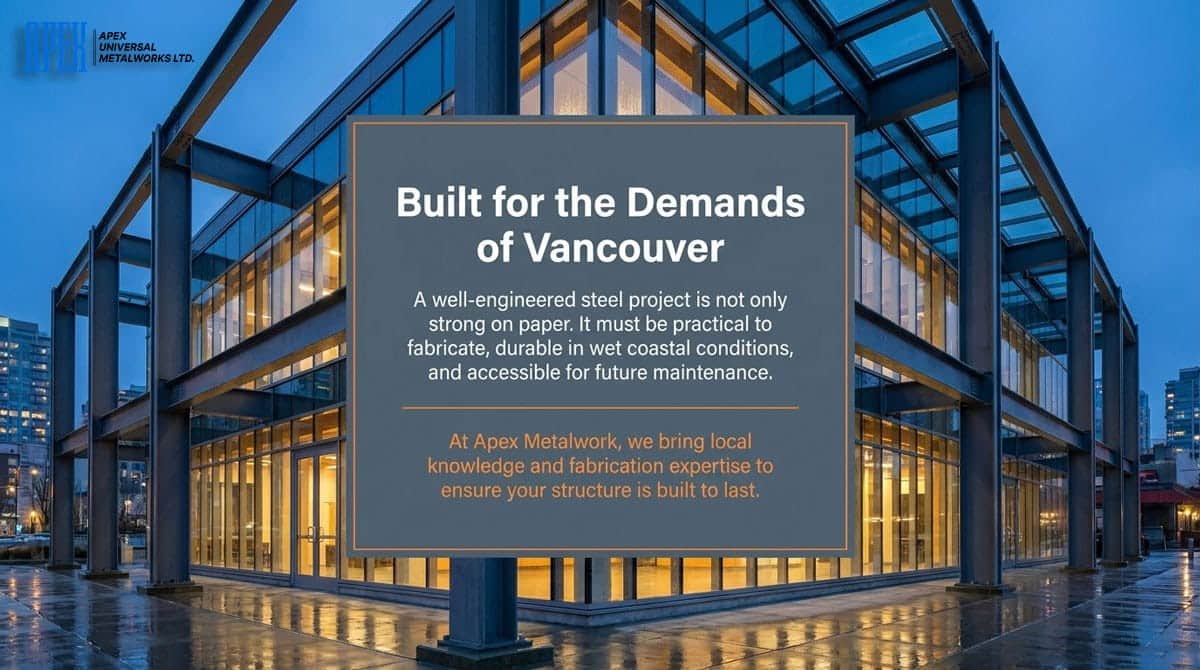
A Wet Coastal Environment, Not Just a Rainy City
Vancouver is not simply “rainy.” It is a damp coastal environment where steel can remain wet for long periods, especially in shaded, exterior, or semi-exposed areas.
For steel structures, this matters because moisture can collect in:
- Base plates and anchor areas
- Bolted and welded connections
- Horizontal ledges and flat plates
- Stair stringers, railings, canopies, and platforms
- Gaps between steel and surrounding envelope materials
Good steel engineering in Vancouver should always consider how water will drain, where moisture may sit, and how easily the structure can dry after rainfall.
Moisture, Salt Exposure, and Long-Term Durability
Moisture increases corrosion risk, and in areas closer to the waterfront, salt in the air can accelerate that process. This does not mean steel is a poor choice for Vancouver. It means the protection system must match the exposure level.
| Steel Location | Typical Concern | Design Response |
| Interior steel | Lower moisture exposure | Standard protection may be enough, depending on use |
| Semi-exposed steel | Intermittent wetting and slow drying | Better coating, drainage, and inspection access |
| Exterior coastal steel | Higher corrosion risk | Galvanizing, duplex systems, or upgraded coatings may be needed |
Seismic Risk in British Columbia
Vancouver is in a seismic region, so earthquake performance must be considered from the start of any steel structure project. Steel is a strong choice for seismic design because it can combine strength and flexibility, but only when the structural system, connections, base plates, and anchors are properly engineered. Early coordination is important, since late seismic changes can affect cost, fabrication, and installation.
Seasonal Storms, Wind-Driven Rain, and Drainage Challenges
Before fabrication, check these points:
- Can water drain off steel surfaces properly?
- Are there flat areas where water may collect?
- Can protective coatings reach all critical connection areas?
- Are steel details coordinated with the building envelope?
- Will the steel remain accessible for inspection and maintenance?
In Vancouver, good drainage detailing is essential for long-term steel performance.
Is Steel a Good Choice for Vancouver’s Climate?
Yes, steel can be an excellent choice for Vancouver if it is designed and protected properly. It performs well in structural applications, handles seismic demands effectively, and can suit both functional and architectural projects. The main issue is not whether steel works in Vancouver, but whether it is detailed for moisture, corrosion, and long-term exposure.
If you are still comparing structural systems, our article on steel structure vs concrete for BC projects breaks down where each option may be more cost-effective.
Key Advantages of Steel Structures in Vancouver
- Strong and efficient for framing and long spans
- Good performance in seismic design
- Faster fabrication and installation than many alternatives
- Flexible for commercial, industrial, and custom projects
- Can be protected with coatings, galvanizing, or other systems based on exposure
- Suitable for both enclosed and exposed structural applications
Potential Challenges if Steel Is Poorly Detailed or Protected
| Problem Area | Possible Issue |
| Corrosion protection | Premature rusting in wet or coastal conditions |
| Drainage | Water pooling around connections or base details |
| Coating access | Missed areas during fabrication or touch-up |
| Envelope coordination | Moisture trapped where steel meets building materials |
| Maintenance access | Difficult inspection and repairs later |
Steel performs well in Vancouver, but poor detailing can shorten service life and increase maintenance costs.
The Main Climate-Related Risks for Steel Structures in Vancouver
Steel structures in Vancouver must be designed for moisture, coastal air, seismic activity, wind, and site-specific loads. These risks are manageable when they are considered early in engineering and detailing.
Corrosion from Rain, Humidity, and Coastal Air
Frequent rain, humidity, and coastal salt exposure can increase corrosion risk, especially for exterior steel. Proper coatings, galvanizing, drainage, and maintenance access help reduce long-term damage.
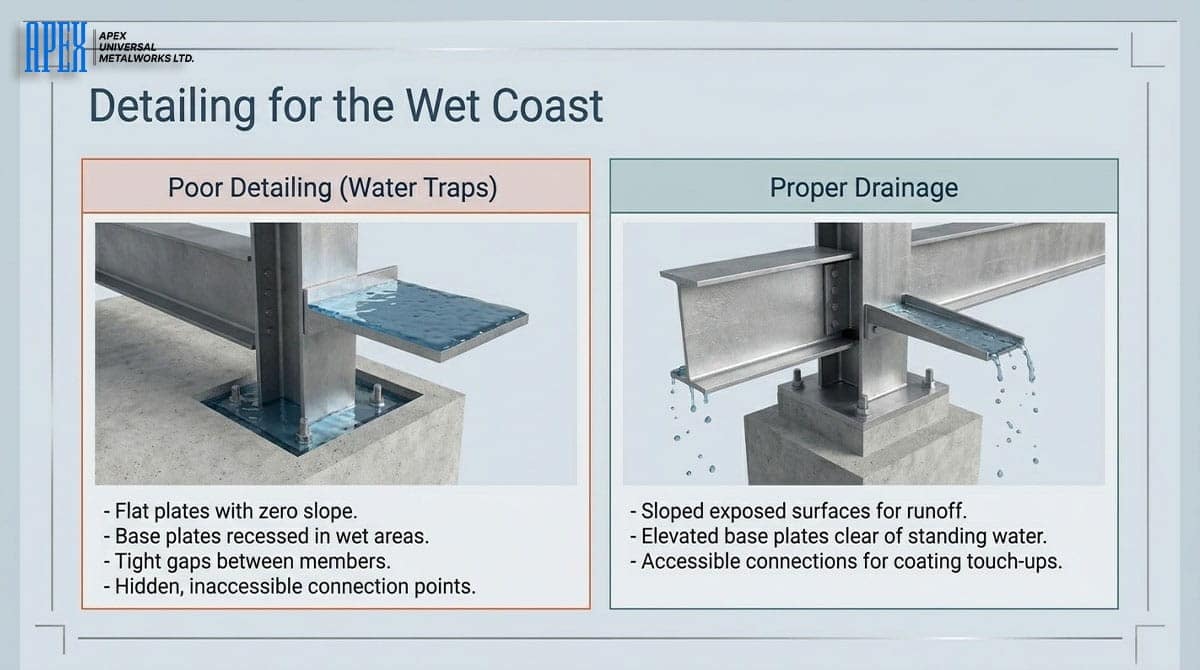
Water Traps and Poor Drainage Details
Water-trap details can shorten the life of steel components. Watch for:
- Flat plates with no slope
- Base plates in wet areas
- Tight gaps between members
- Hidden connection points
- Horizontal surfaces that collect debris
Condensation in Enclosed or Semi-Exposed Steel Areas
Condensation may form when moist air contacts cooler steel. This is common in semi-enclosed spaces, parkades, canopies, and poorly ventilated areas. Good airflow and accessible inspection points help reduce hidden corrosion.
Wind-Driven Rain and Building Envelope Coordination
Wind-driven rain can enter joints, penetrations, and steel-to-wall interfaces. Steel details should be coordinated with flashing, sealants, cladding, and waterproofing to prevent trapped moisture.
Seismic Loads and Connection Performance
In Vancouver, seismic design depends heavily on connection performance. Beam-to-column connections, bracing, base plates, anchors, welds, and bolts must work together as one structural system.
Snow, Wind, and Site-Specific Load Considerations
Snow and wind loads depend on location, height, exposure, roof shape, and surrounding conditions. Site-specific engineering helps ensure the steel structure is designed for real local demands.
How Engineers Design Steel Structures for Vancouver’s Conditions
Steel design in Vancouver starts with site conditions. Engineers look at exposure, moisture, seismic loads, wind, drainage, corrosion protection, and constructability before finalizing the structure. If you are planning a new project, you can also review our guide to building permits for steel structure construction in BC to better understand approval requirements.
Site Exposure Assessment
Engineers first identify how exposed the steel will be. Interior beams, exterior stairs, canopies, and waterfront steel all need different protection levels. Rain exposure, salt air, drainage, and maintenance access should be reviewed early.
Structural System Selection
The structural system is chosen based on building use, span, load demands, budget, and seismic performance. Steel frames, braced frames, moment frames, and hybrid systems may all be considered depending on the project.
Seismic Design and Lateral Load Resistance
For seismic performance, the structure needs a clear load path from the roof and floors to the foundation.
| Element | Role |
| Bracing or moment frames | Resist lateral forces |
| Connections | Transfer loads |
| Base plates and anchors | Secure steel to foundations |
| Accurate fabrication | Supports proper installation |
Connection Detailing for Wet Environments
Connections can trap moisture if they are not detailed properly. Engineers should reduce tight gaps, exposed ledges, and hard-to-coat areas. This helps protect bolts, welds, plates, and connection zones.
Drainage, Slope, and Moisture Management
Good detailing helps steel dry faster after rain. Key points include:
- Slope exposed surfaces where possible
- Avoid flat areas that hold water
- Keep base plates away from standing water
- Provide access for coating touch-ups and inspection
Coordination with Architects, Envelope Consultants, and Fabricators
Early coordination helps prevent site conflicts and moisture problems. Steel details should align with cladding, flashing, waterproofing, coating systems, and installation access.
Corrosion Protection Options for Steel Structures in Vancouver
Corrosion protection should match the steel’s exposure, location, and maintenance access. In Vancouver, exterior or semi-exposed steel often needs stronger protection because of rain, humidity, and coastal air.
Protective Paint and Coating Systems
Paint and coating systems are common for structural steel. They work well when surface preparation, primer, coating thickness, and touch-ups are done properly. They are useful for interior steel, architectural steel, canopies, stairs, and platforms.
Hot-Dip Galvanizing
Hot-dip galvanizing adds a zinc layer to protect steel from corrosion. It is often a strong choice for exterior stairs, railings, platforms, supports, and utility steel because it protects edges and hard-to-reach areas well.
Duplex Systems: Galvanizing Plus Paint
A duplex system combines galvanizing with paint or powder coating. It is useful when steel needs both high corrosion resistance and a specific colour or finished appearance.
Stainless Steel for Selected Components
Stainless steel can be used for high-exposure or moisture-sensitive parts such as fasteners, anchors, handrail components, and selected exterior details. It is durable but usually more costly.
Weathering Steel: When It May or May Not Be Suitable
Weathering steel needs proper wet-dry cycles to form a protective surface. In damp, salty, or poorly drained locations, it may stain nearby materials or perform poorly, so it should be used carefully in Vancouver.
Choosing the Right Protection Based on Exposure Level
| Exposure Level | Common Protection Approach |
| Interior dry steel | Primer or standard coating |
| Semi-exposed steel | Upgraded coating and good drainage |
| Exterior steel | Galvanizing, high-performance coating, or duplex system |
| Coastal/high-moisture areas | Stronger protection plus planned maintenance |
Common Mistakes to Avoid When Building Steel Structures in Vancouver
Some steel problems in Vancouver are not caused by the material itself. They come from design decisions, poor coordination, or protection systems that do not match the local climate.
Common issues to avoid
- Using a generic steel design without accounting for Vancouver’s rain, humidity, coastal exposure, and seismic conditions
- Ignoring corrosion risk at connections, where bolts, welds, plates, and tight gaps are often more vulnerable than main members
- Choosing the wrong coating system for the actual exposure level
- Creating water traps through flat plates, hidden ledges, unsealed gaps, or poor drainage details
- Bringing fabricators in too late, which can lead to impractical details, delays, or costly revisions
- Skipping maintenance planning, especially for exterior or semi-exposed steel that will need inspection over time
- Underestimating seismic connection requirements, including bracing, anchors, base plates, and connection detailing
A well-engineered steel project is not only strong on paper. It should also be practical to fabricate, durable in wet conditions, and accessible for future maintenance.
Maintenance Tips for Steel Structures in Vancouver’s Wet Climate
Vancouver’s wet coastal climate makes ongoing maintenance essential, not optional. A consistent plan catches small issues before they become costly repairs.
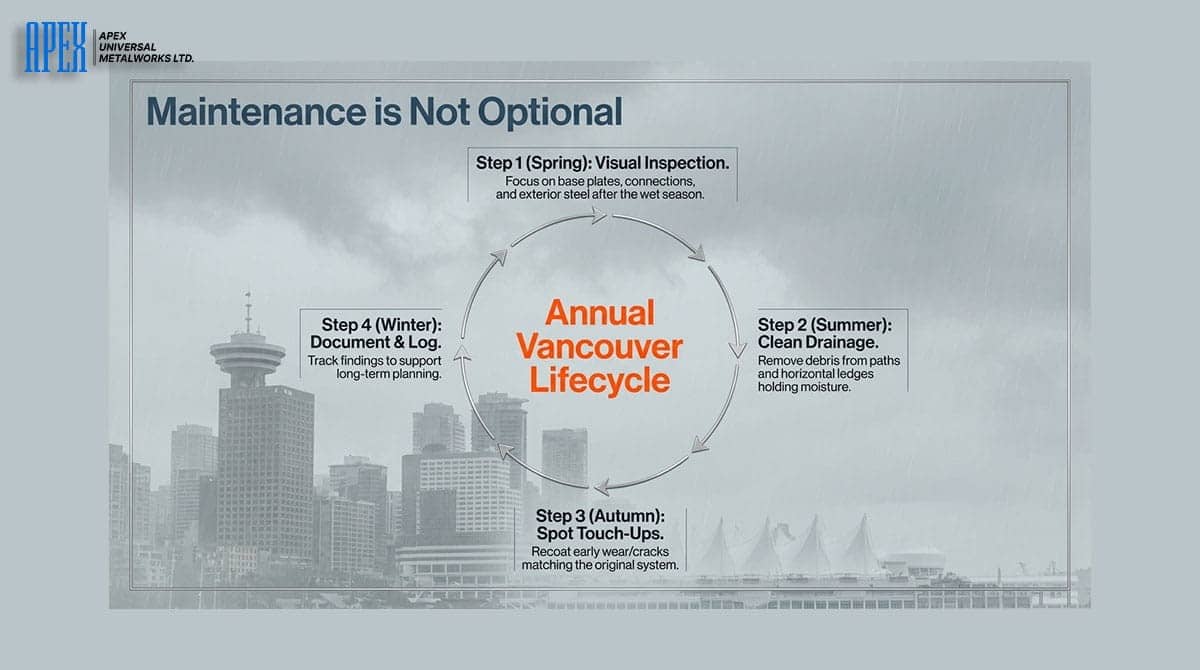
Regular Visual Inspections
Inspect at least once a year, ideally in spring after the wet season. For coastal or high-exposure locations, twice yearly is better. Prioritize exterior steel, base plate zones, canopies, and stairs.
Checking for Rust, Coating Damage, and Water Accumulation
Focus on the most vulnerable areas: base plates, bolted and welded connections, horizontal ledges, stair stringers, and gaps between steel and envelope materials. Early rust or peeling coating should be addressed quickly before moisture reaches the base steel.
Cleaning Drainage Areas and Exposed Steel Surfaces
Debris and dirt block drainage and hold moisture against steel. Regularly clean drainage paths, flat ledges, and connection zones. Clean surfaces also make coating damage easier to spot during inspections.
Repainting or Recoating When Needed
Do not wait for visible rust to act. Touch up coatings showing early wear or cracking using products that match the original system. Recoating on time is far cheaper than full corrosion remediation.
Inspecting Bolted and Welded Connections
Connections trap moisture and are harder to coat thoroughly. Check bolt heads, nuts, and weld toes for rust staining or coating failure during every inspection.
Documenting Maintenance for Long-Term Performance
Keep a simple log of inspection dates, findings, areas recoated, and products used. Documentation helps track performance over time and supports future maintenance planning.
How Corrosion Protection Impacts Lifecycle Cost
The right protection system reduces long-term costs significantly. Under-protected exterior steel in Vancouver’s climate may need major remediation within 10 years, while a well-applied galvanizing or high-performance coating system can last 25 years or more with routine upkeep. Higher upfront investment in protection almost always lowers total lifecycle cost.
Conclusion
Building and maintaining a steel structure in Vancouver requires more than standard engineering, it demands climate-aware design, proper corrosion protection, and consistent upkeep suited to the region’s wet coastal conditions and seismic demands. From early detailing decisions to long-term maintenance planning, every step affects how well the structure performs over time.
At Apex Metalwork, we bring local knowledge and fabrication expertise to every project, helping clients in the Lower Mainland build steel structures that are strong, durable, and built to last in Vancouver’s demanding environment. If you are planning a new project, our steel structure services in Vancouver are designed to support durable, climate-aware construction from fabrication through installation.